The Great AI Decoupling: Independence, Addictive Agents, and the Fight for Security
Today’s AI landscape is undergoing a massive shift in gravity. We are witnessing the beginning of the end for the cozy alliances that defined the early wave of generative AI, replaced by a fierce race for corporate sovereignty, powerful local hardware, and the dual-use reality of AI-driven cybersecurity. From corporate boardrooms to the codebases of open-source video libraries, the technology is moving faster than our guardrails can handle.
The biggest narrative of the day comes from the changing relationship between tech giants. For years, Microsoft’s AI strategy has been inextricably linked to OpenAI. However, Microsoft AI chief Mustafa Suleyman recently declared that the Redmond giant has been set free from OpenAI to pursue its own path toward superintelligence. Armed with seven new in-house models, Microsoft is clearly eager to shed its dependency on external partners.
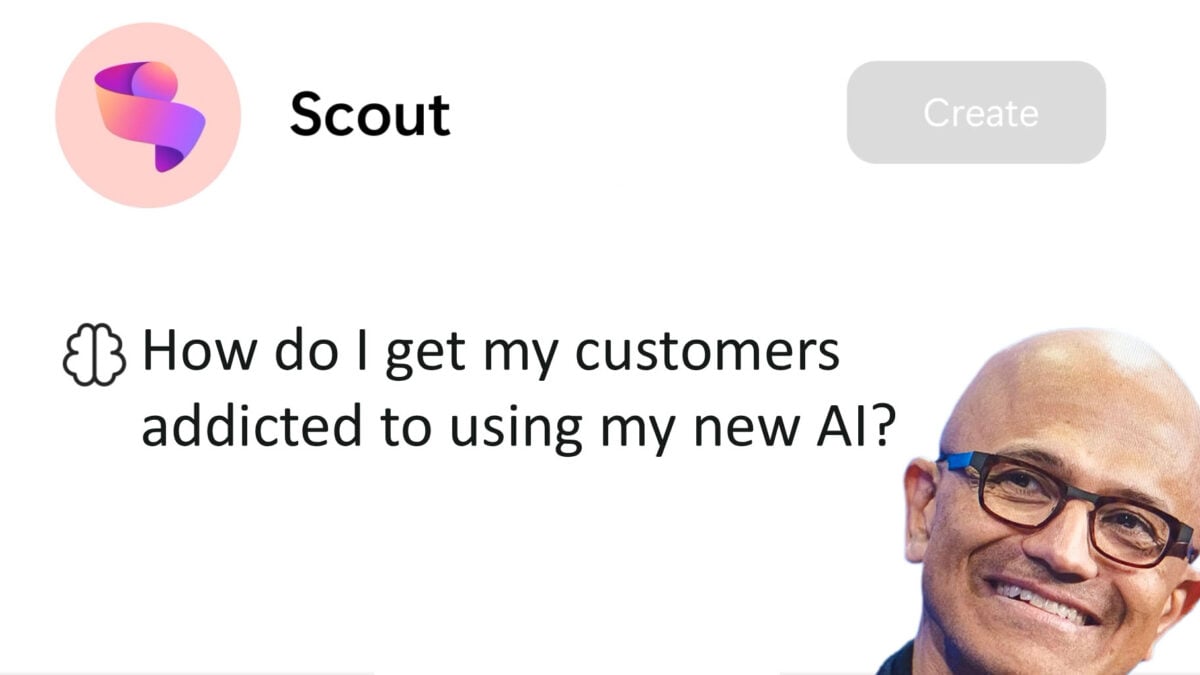
Yet, this bid for autonomy has already hit a public relations snag. A leaked internal strategy document revealed that Microsoft’s goal for its new AI personal assistant, “Scout,” is to make it highly addictive to users. While CEO Satya Nadella has publicly expressed surprise at the phrasing, the leak highlights a concerning trend: tech companies are already looking to apply the same dopamine-loop mechanics used by social media to our virtual assistants.
This tension between corporate ambition and user safety is also playing out on the security front. As language models become more deeply integrated into our digital lives, they present attractive targets for exploitation. To combat this, OpenAI has begun rolling out a new Lockdown Mode for eligible accounts. This feature restricts outbound requests and limits third-party tools to prevent prompt injection attacks from silently exfiltrating sensitive user data.
But while we scramble to defend our chatbots, AI is proving to be an incredibly potent tool on the offensive side of cybersecurity. In a stunning display of utility, a security startup’s AI agent successfully unearthed 21 zero-day vulnerabilities in FFmpeg, the ubiquitous media library that underpins almost all modern video software. Some of these bugs had lay hidden, undetected by human eyes, for over twenty years. It is a stark reminder of AI’s dual nature: it can find the needles in our digital haystacks, but it also arms whoever controls the agent with unprecedented power to find weaknesses in the world’s infrastructure.
To run these increasingly complex agents and models, the industry is throwing massive amounts of hardware at the problem. For developers who want to skip the cloud and run heavy workloads locally, HP just announced what is being hailed as the most powerful Windows AI PC ever built. The HP Nvidia GB300 workstation packs an astonishing 784GB of unified memory, allowing it to local-host models with up to one trillion parameters. For those with slightly lighter workloads but much deeper pockets, HP also revealed a luxury Scuderia Ferrari AI PC priced at a staggering $5,599, proving that AI branding has officially entered the ultra-premium lifestyle market.
Yet, as AI hardware and capabilities scale, the cultural friction surrounding generative content shows no signs of slowing down. The gaming community is currently embroiled in a fresh controversy after the reveal trailer and promotional art for the upcoming game Blood Rain—a spin-off of the hit game Stellar Blade—faced heavy criticism from fans who noticed the assets appeared to be riddled with generative AI artifacts. This pushback highlights a growing exhaustion among consumers who are beginning to reject low-effort, AI-generated imagery in high-budget creative projects.
Ultimately, today’s developments show an industry transitioning from its experimental phase into a hard-nosed, practical era. Tech giants are fighting for independence, security teams are weaponizing AI to patch decades-old holes, and hardware makers are building the local engines to power it all. As AI becomes faster, more local, and more persuasive, the challenge will no longer be making these systems work—it will be ensuring we can control them once they do.